
How our consultants see their career growth
At Agilcon and Gecko HRM, consultants are at the centre of digital transformation. They work closely with clients to understand their business needs, design tailored solutions, and bring platforms like Salesforce and Gecko HRM to life in a way that actually works in practice.
It is a role that sits right between business and technology, continuously learning and evolving along the way. But what does that growth really look like in practice?
In this blog, we share real stories from our team of consultants: how they transitioned into their roles, how they were supported through onboarding and mentorship and how they continue to build their expertise.
If you are looking for a place where you can grow into a role, not just fill one, come along this journey with us.
1. Career Development Journey: There Is No Straight Line
Different beginnings, shared direction
If you try to define a “typical” consultant at Agilcon or Gecko HRM, you will quickly realise there isn’t one. We value the unique perspective that unusual backgrounds bring to the table.
Boris Rugel, Gecko Solution Consultancy Team Lead, began his journey as a graduate biochemist. “I didn’t see a path there. I went after a second degree in web programming online and applied to Agilcon,” he explains.
Similarly, Ana Ina Palmer, Salesforce Solution Consultant, moved from studying Comparative Literature and Philosophy to marketing and then into the Salesforce world. “First I had the idea that I would teach at university,” she reflects, “then, while working in marketing within the IT sector, realised I wanted to do something else, but still something in the IT world”.
Nadja Škafar, Gecko Administrator, joined us directly from her Psychology studies. Despite her original interest in HR, the technical shift was significant: “Everything was new. The tools we work with, the way products are developed. 90% of things were completely new to me”.
Natalija Rozman, Salesforce Administrator and Project Manager, holds a Master’s in Sanitary Engineering. She moved from customer success team into consultancy because of a personal interest in the field: “It turned out this was what the project needed, and at the same time, it was something I wanted to explore too”.
Growth that adapts to you
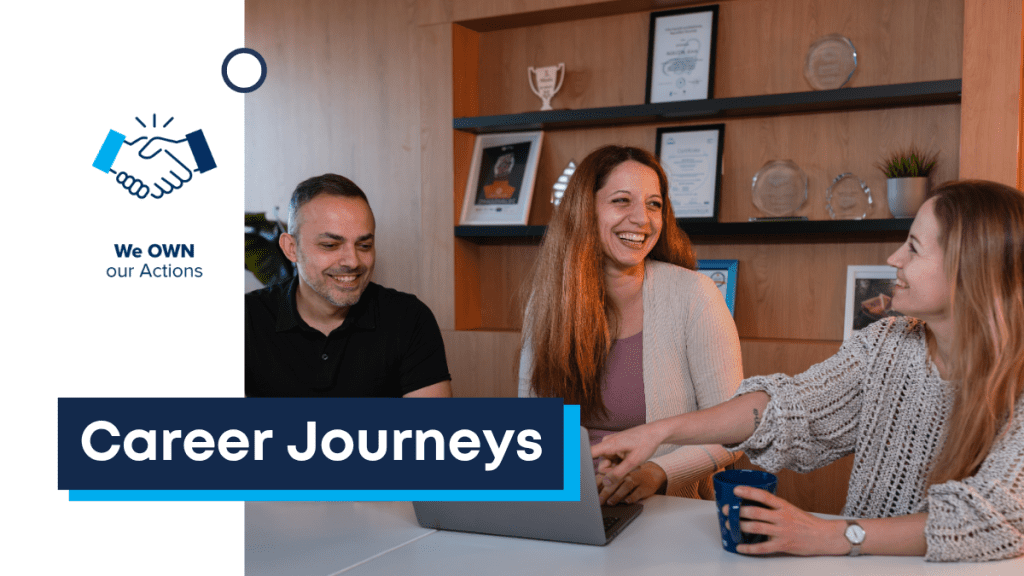
What makes these transitions successful is not just individual ambitions, but the environment that supports them.
Miloš Sebić, a Salesforce Administrator who joined us eight years ago, remembers the hurdle of the language and of his background being in a different tech field. Originally an IT professional from Belgrade, he was encouraged by Agilcon’s leadership to try consultancy despite his initial reservations about the language barrier.
“Agilcon listens to what you want to do. If you want a change in your role, they listen and they act quickly,” Miloš notes. “It’s a 10 out of 10 experience”.
This flexibility allows consultants to shape their careers over time, moving between roles, building new skills, and growing in directions that align with both personal ambition and business needs.
Learning how to think, not just what to do
The biggest transformation is not technical. It is learning how to approach problems. Consultants quickly move beyond focusing on what they do not know and start focusing on how to find solutions. They learn to:
- understand client goals
- translate business needs into practical solutions
- communicate across different stakeholders
Mateja Benedik, Gecko Solution Consultant, spent a decade in sales before finding her place in IT. She notes that her previous experience was her greatest asset:
“My communication and work with customers really helps. Even if you don’t have technical knowledge, it is about knowing how to make contact with the customer”.
Mateja continues to gain more knowledge in coaching and communication, and regularly shares it with her team through internal training sessions.
Stana Džudović, Salesforce Senior Solution Consultant and Team Lead, believes that this diversity strengthens the team, as it allows individuals to discover which areas they naturally excel in, such as client communication or technical configuration.
2. Mentorship and Onboarding: From First Steps to Real Confidence
A structured start that removes uncertainty
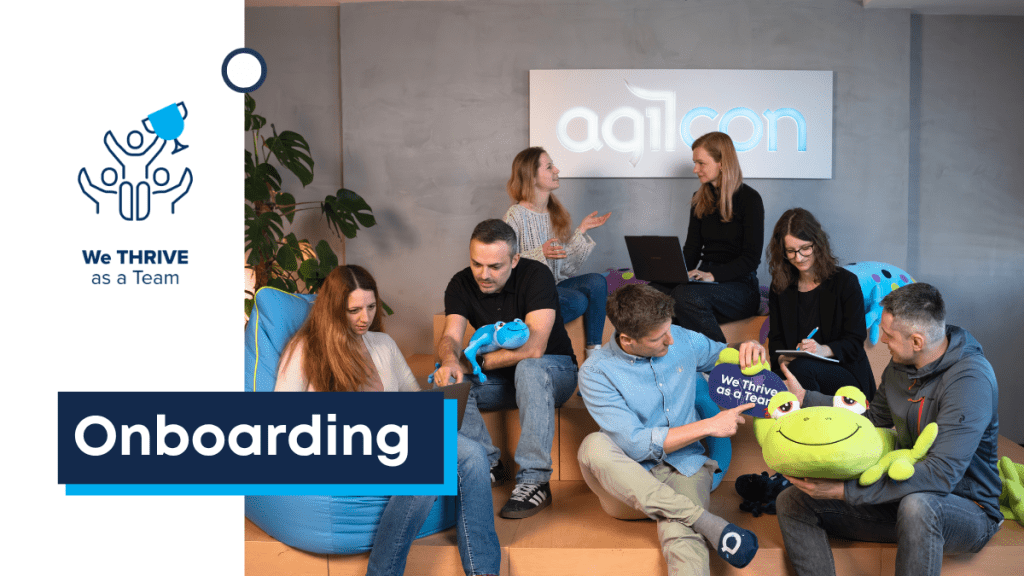
Starting in consulting can feel intense, but at Agilcon and Gecko HRM, onboarding is designed to guide rather than overwhelm. Newcomers are introduced to work gradually, building knowledge step by step.
Natalija Rozman recalls the close support she received during her first months: “For the first two months, we had daily meetings, like a check-in, to look at things as we went and find out anything that was not clear to me”.
This was echoed by Nadja Škafar, who appreciated the personalised pace: “It was adapted to my knowledge. It was not too much at once, but it was not too easy either. I had a lot of autonomy within my sprints”.
Stana Džudović takes a very hands-on approach to onboarding, often involving newcomers in project testing almost immediately. “I involve them in end-to-end testing for projects,” Stana explains. “I describe the process to them, and they go into the role of the customer, writing test scenarios and thinking about why something was made and how it could be better”.
Mentorship that feels natural
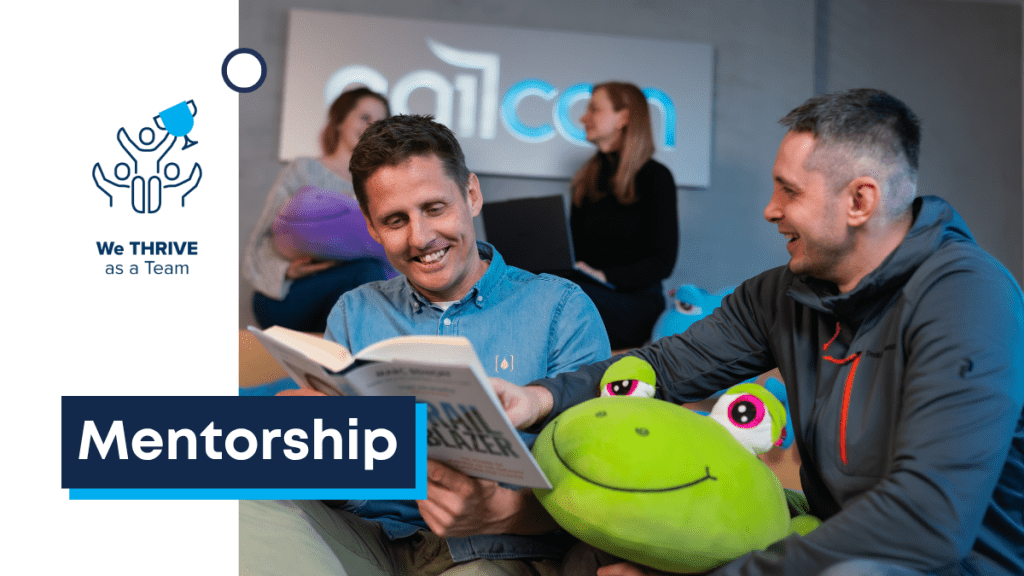
Mentorship is not treated as a formal process that ends after onboarding. It is part of everyday work and it is an active partnership.
Boris Rugel explains the importance of our “buddy” approach: “It turned out to be beneficial for a newcomer to also have someone else besides their formal team lead to check in with. A peer they can ask questions to and discuss what they’re learning”.
Dean Levačič, Salesforce Solution Consultancy Team Lead, who has been mentoring for over 15 years, believes in a balance between support and independence. “You do not leave a new person completely alone, but you must let them swim a little,” Dean explains.
“The goal is for them to become independent and confident, though a mentor always stays available for questions”. He also likes to ensure mentees have tried to find a solution themselves first: “I like to check if they have thought and researched for themselves first, so they do not just rely on me”.
From support to ownership
As consultants progress, they gradually take on more responsibility. They move from learning concepts to working on real use cases, and eventually to owning parts of projects. Mateja Benedik reflects on how this mentorship builds capability: “Being available to someone provides them with a sense of security, which greatly increases their self-confidence”.
The most significant learning experience for Ana Ina Palmer was embracing the combined role of project manager and consultant. It was an evolution from working solely within a system to navigating complex client requirements, a skill she now describes as second nature.
3. Training and Certification: Building Expertise That Lasts
Strong foundations first
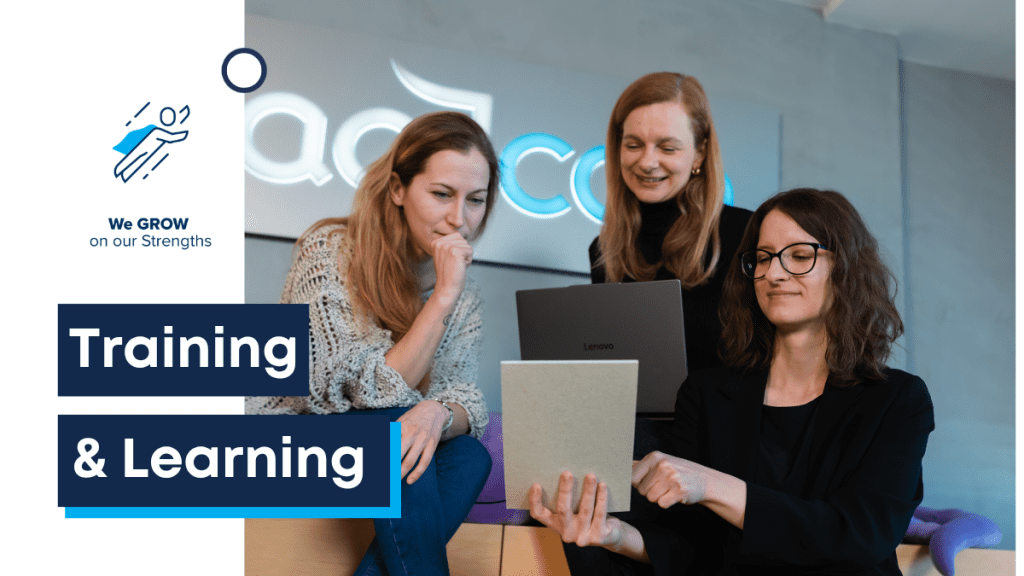
In a complex environment like Salesforce and Gecko HRM, structured learning is essential. Certifications provide the foundation consultants need to understand systems, processes, and the broader context of their work.“The Salesforce Admin certificate was very important for me because it gave me a very good foundation,” says Nadja Škafar.
She is planning on completing Salesforce’s Agentforce certification next. This will give her in-depth knowledge of the subject matter that she will use in her work with Gecko’s AI features as our very own AI ninja.
Ongoing investment into education is not optional. It is part of the role. “We all have to complete certifications, they give you the basic knowledge you need,” explains Mateja Benedik.
Bridging business and technology
Consultants operate between two worlds. They work with clients to understand business needs and with technology to deliver solutions.
As Boris Rugel explains: “Gecko consultants don’t need deep technical backgrounds, but they must understand how to structure data and use our configuration language, Flash.”
Flash is Gecko’s configuration layer, designed so that even those without a development background can build and adapt solutions. It works like a simplified form of code, allowing consultants to add fields, adjust processes, and configure workflows directly in the system, making it possible to turn business requirements into working solutions without relying entirely on developers.
Continuous learning as part of the role
Ana Ina Palmer views her multiple certifications as a matter of professional trust. “When you can tell a client that you have a certified team, it builds trust,” she says.
“It is not just that we looked something up on the internet: we have the credentials to back it up”. She recently specialised in Marketing Cloud Intelligence and has Agentforce on her horizon.
Dean Levačič believes that even for senior staff, the learning never stops: “No matter how much of an expert you are, certificates push you to research things and expand your knowledge”.
4. Recognising Excellence: Support That Enables Growth
Recognition that feels meaningful
Progress in consultancy is often a marathon, not a sprint, which makes recognition vital for motivation. Often, the most meaningful feedback comes from direct managers and team members. Nadja Škafar shares: “The most important thing for me is that the leaders recognise my effort. It is the biggest motivational factor in my work”.
Stana Džudović sees recognition not just as a system, but as part of a broader culture of fairness and respect. “I feel that excellence is recognised and rewarded. Agilcon is the first work environment where I’ve seen that if you do something extra, it’s actually noticed.”
For her, what matters is not just formal recognition, but how people perceive your work. “It means a lot to me what people say about my work. Having a good opinion from others matters more than anything else.”
It also directly influences how she leads her own team. When something does not feel right, the goal is not to ignore it, but to understand why and work towards a solution. Regular discussions with team members help identify what can be improved and how individuals can grow.
What excellence looks like in practice
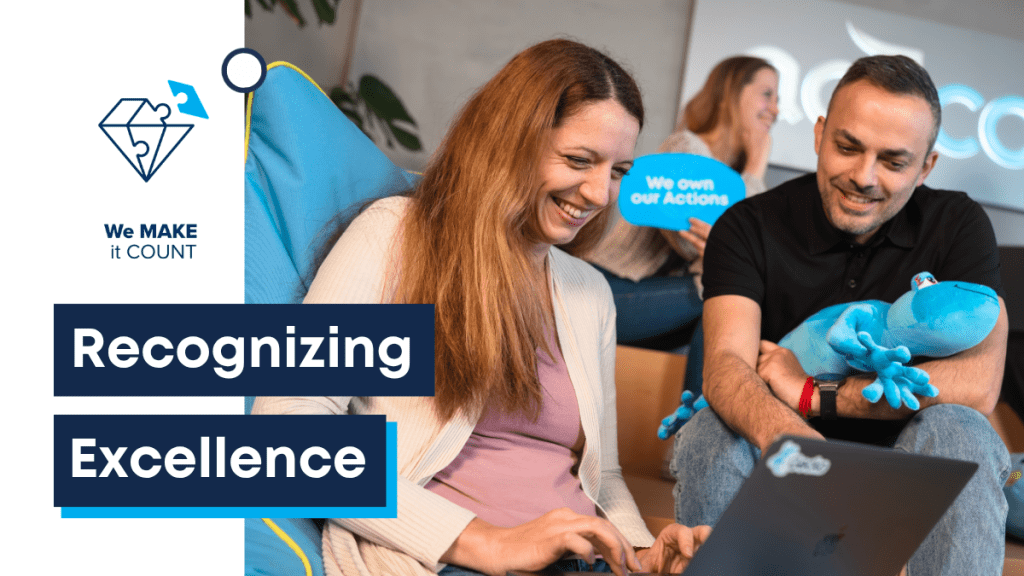
Excellence is not just about completing tasks. It is about how challenges are handled and how value is delivered.
Excellence is often found in the “extra mile”. Boris Rugel describes our “One-Time Incentive” (OTI) system: “It is about showing maturity in a situation, reacting correctly, or preventing a negative scenario. It is not about standard work, but something more”.
Miloš Sebić recalls a major project of implementing the Salesforce platform for a large manufacturing company, spanning across 32 countries and including over 500 agents. “The effort was really recognised and the work of your team was highly praised. It was a great experience to work on such a large project”.
These moments define what it means to truly add value. Natalija Rozman also sees recognition in the form of new opportunities: “I feel my effort was properly recognised. I showed initiative and took a project into my own hands when it was needed”.
Knowing someone has your back
Perhaps the most powerful aspect of recognition is not formal at all. It is the sense of support when things do not go perfectly.
Mateja Benedik shares an experience that captures this: “I had a difficult situation with a client… and the management stood by me. They’ve asked for an explanation in order to understand the situation, but no one blamed me. We solved the issue together.”
This creates an environment where consultants feel safe to take responsibility, learn from challenges, and continue growing. “It’s a safe, healthy environment where you can make mistakes and be who you are,” Mateja says.
Are You Interested in Growing With Us?
Whether you’re just starting your career journey or looking for your next challenge, we offer mentorship, learning opportunities, and a culture that values excellence.
